Master Puppy Training Effective Techniques for a Strong Start

Introduction
Welcoming a puppy into your home is a joyful experience, but it also comes with responsibilities, particularly in the realm of training. **Establishing a strong foundation for your puppy from the start** is crucial for fostering a well-behaved adult dog. Effective training not only helps in managing behaviors but also strengthens the bond between you and your furry companion.
Understanding how to train your puppy can make all the difference in ensuring a harmonious household. Consider these key aspects:
- Socialization: Introducing your puppy to various environments, people, and other animals.
- Consistency: Utilizing the same commands and routines to avoid confusion.
- Positive Reinforcement: Rewarding good behavior to encourage repetition.
- Patience: Allowing time for your puppy to absorb training and grow.
In this article, we will explore the **Top 5 effective techniques** for training your puppy, setting the stage for a successful pet-owner relationship. Get ready to dive deep into each method and discover how these strategies can transform your training journey.
Top 5 Effective Techniques for Training Your Puppy: Building a Strong Foundation
When you bring a puppy into your home, you’re not just adopting a pet—you’re welcoming a new family member. It’s a time filled with excitement, laughter, and an abundance of cuteness, but it also introduces a variety of challenges, primarily focusing on education and training. The ability of your puppy to grow into a well-behaved and sociable adult dog profoundly relies on the foundation laid during those early days. Here, we delve deeper into the top five effective techniques for training your puppy, providing you with the tools needed to foster a healthy and nurturing relationship.
5. Socialization
When discussing puppy training, not enough can be said about the importance of socialization. A well-socialized puppy tends to adapt better to new situations, people, and other animals. The objective is to introduce your puppy to as many different environments, sounds, and experiences as possible.
- Arrange playdates with other vaccinated dogs to encourage healthy interaction.
- Expose your puppy to different noises, such as cars, vacuums, and loud appliances, helping them adapt and overcome fear of these sounds.
- Take trips to pet-friendly stores or parks to allow your puppy to experience different textures under their feet and to encounter people of various ages and appearances.
The ideal age range for maximum socialization opportunities is between 3 to 14 weeks of age. Proper socialization can mitigate behavioral issues like aggression or fearfulness that often arise later in a dog’s life. Each experience should be positive, and your approach should be one of patience and encouragement during this critical development period.
4. Positive Reinforcement
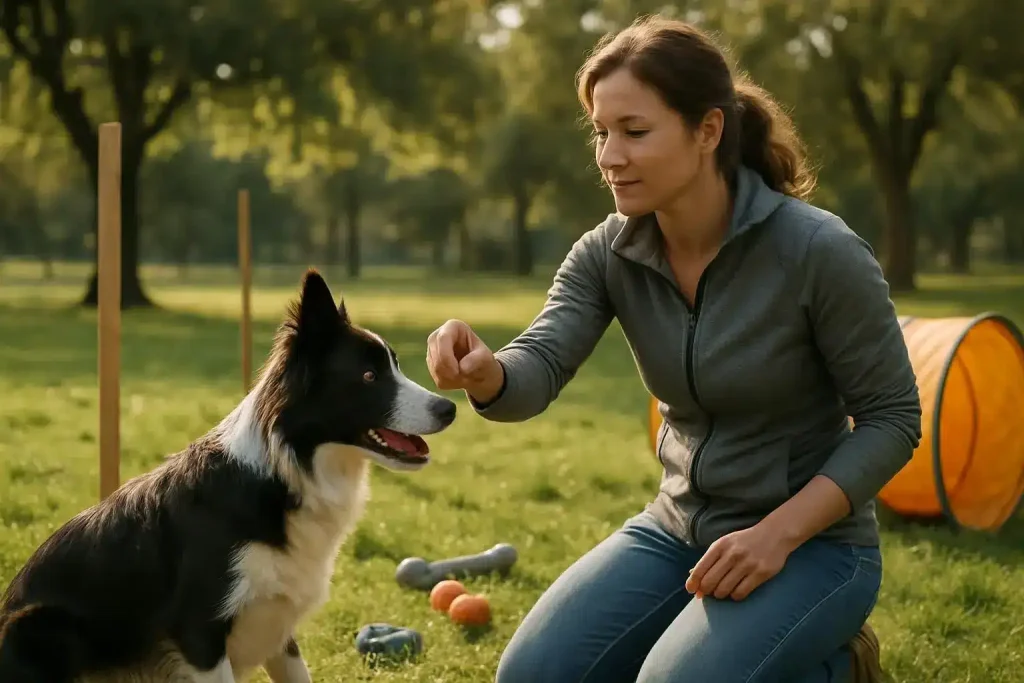
Positive reinforcement is arguably the most scientific and effective approach to training your puppy. The essence of this method lies in rewarding desired behaviors, thereby increasing the likelihood that your puppy will repeat those actions. Here’s how you can seamlessly incorporate positive reinforcement into your training practice:
- Utilize treats, praise, or favorite toys as rewards for good behavior.
- Deliver rewards immediately after the desired action to create a direct association.
- Select rewards that truly motivate your puppy—some might prefer belly rubs over treats, or a game of fetch over a snack.
The impact of positive reinforcement extends beyond simple obedience. It fosters a deeper, trust-filled relationship between you and your puppy. As your pet understands that good conduct is met with love and reward, it inherently strengthens the bond you share.
3. Consistent Commands
Consistency in communication is fundamental to effective training. Dogs need to understand what is being asked of them, and this comprehension is only possible through the use of consistent commands. This technique hinges upon clarity and repetition:
- Choose concise command words (such as “sit,” “stay,” “come”) and use them consistently.
- Ensure that every family member employs the same vocabulary to avoid confusing the puppy.
- Acknowledge that learning these commands might take time and that patience is key.
By establishing a consistent verbal framework, your puppy can more easily associate words with actions, facilitating faster learning and reaction times as they grow accustomed to these cues.
2. Teaching Basic Commands
The backbone of a well-mannered canine lies in understanding and performing basic commands. These fundamental instructions are critical, not just for compliance, but for your pet’s safety and your peace of mind. Essential commands to focus on include “sit,” “stay,” “come,” and “leave it.”
- Initiate training with short but frequent sessions to maintain your puppy’s engagement and enthusiasm.
- Use treats as lures to guide them into the desired positions, ensuring clarity of the command-action association.
- Gradually introduce distractions as your puppy becomes proficient, to reinforce these commands in varied settings and stimuli.
By mastering these basic commands, you afford your puppy the skills to navigate the world with confidence and you ease into more advanced training as they mature.
1. Patience and Persistence
Ultimately, the culmination of these techniques relies heavily on patience and persistence. Training a puppy is a journey, one that involves both successes and setbacks. Remember, puppies are learning at their own pace and every small victory counts toward their growth.
- Recognize that setbacks are part of the learning curve. Persevere with patience.
- Celebrate small successes, reinforcing both your motivation and that of your puppy.
- Commit to regular practice, ensuring the reinforcement of learned behaviors and continued progress.
Your outlook on training significantly affects its outcome. Approach this journey with an understanding that your puppy is navigating its own learning path, which varies for each individual. By maintaining a calm and positive environment, your puppy is more likely to flourish.
In conclusion, establishing a strong foundation through effective puppy training techniques doesn’t just cultivate a well-behaved dog but also fosters a deep, loving bond that will last throughout your pet’s life. From socialization and positive reinforcement to consistent commands and basic training, infused with endless patience and persistence, you are preparing yourselves for an enriching companionship. Remember, each step is an investment into a future filled with joy and mutual respect. Happy training!
The journey of training your puppy is one marked by joy, challenges, and a myriad of techniques designed to build a solid foundation. Understanding the effectiveness of varied approaches can enhance not only your puppy’s learning experience but also strengthen the bond between you and your new friend. Here are some effective techniques you might consider implementing as you embark on this training adventure, solidifying the groundwork for well-mannered behavior.One prominent method is positive reinforcement, which is pivotal for developing desired behaviors in puppies. This technique revolves around rewarding your puppy for performing the correct actions, fostering an environment of learning through pleasure rather than punishment. Using treats, praise, or playtime as incentives, you can encourage your puppy to repeat behaviors that are acceptable and beneficial. This not only builds a trustful relationship but also enhances your puppy’s confidence, making them more eager to engage and learn. Insightful studies suggest that puppies trained with positive reinforcement tend to display less fear and anxiety, equipping them with a robust mechanism for social interactions and learning throughout their lives.Another core technique is introducing socialization early. Socialization involves exposing your puppy to various environments, people, and other animals from a young age. This exposure is crucial as it helps in developing a well-adjusted adult dog. Engaging with different stimuli ensures that your puppy learns to navigate all kinds of situations calmly and avoids developing any apprehension towards new experiences. This foundational technique should begin as early as possible, ideally between three to fourteen weeks of age, capitalizing on this critical window when puppies are most receptive.In addition to positive reinforcement and socialization, utilizing clear commands coupled with consistent training schedules is vital. Puppies thrive in structured environments where they can anticipate outcomes. By establishing routines, and using consistent verbal cues and hand signals, you can effectively communicate your expectations. For instance, always using the same word for commands like “sit” will help your puppy to associate the sound with the action, resulting in smoother learning progression. Moreover, keeping training sessions short—around five to ten minutes—helps maintain your puppy’s focus and enthusiasm, ultimately enhancing retention.Incorporating fun into training sessions cannot be overlooked. Utilizing games and playful exercises can make the learning experience enjoyable, thus promoting a love for training in your puppy. Activities like hide and seek or fetching can evolve simple obedience commands into engaging experiences. This gradual introduction of play not only reinforces training but also allows your puppy to see training as a positive, rewarding part of their daily routine.Lastly, consistency in handling training challenges is vital. Puppies are naturally curious and may test limits as they learn. Being patient and persistent while addressing unwanted behaviors is crucial; this will define how they perceive the training process. Strategies like redirection, where you guide your puppy’s attention away from undesirable behaviors towards acceptable ones, can be highly effective. This technique allows for calm corrections while fostering an environment where your puppy can learn what is expected of them in a non-threatening manner.As your journey progresses, keep in mind these effective techniques, ensuring that each step you take is rooted in understanding, positivity, and patience. The effort you invest now will yield dividends in the long run as you aid your puppy in becoming a well-adjusted, obedient companion.
Frequently Asked Questions About Training Your Puppy
How long does it typically take to train a puppy?
The duration of puppy training largely depends on the consistency and methods used by the owner. Generally, it can take several weeks to months for a puppy to learn basic commands, although some skills may take longer. Puppies are like sponges, absorbing everything around them, so patience, practice, and perseverance are crucial. According to experts, starting training at a young age—typically around 8 weeks—can lead to more successful long-term outcomes.
What are the most effective techniques for positive reinforcement?
Positive reinforcement is considered one of the most effective training techniques for puppies. This method involves rewarding desired behaviors to encourage their repetition. Treats, praise, and play are common rewards, with the timing of the reward being key—ideally given immediately after the desired behavior. An interesting fact to consider is that 80% of puppies learn faster with positive reinforcement than with other methods, according to recent studies.
How do I address common behavioral issues such as biting and chewing?
Dealing with biting and chewing requires a combination of redirection and consistency. Puppies often explore the world through their mouths, so providing them with appropriate chew toys is essential. If a puppy bites, redirect their attention to a toy or treat. Consistent redirection can help reduce these behaviors over time. Additionally, regular training sessions focused on commands like “leave it” can aid in curbing unwanted chewing habits.
Is crate training beneficial for puppies?
Crate training can be highly beneficial for puppies as it provides them with a sense of safety and structure. It aids in housebreaking by teaching puppies to hold their bladder, reducing the risk of indoor accidents. However, it’s crucial to introduce the crate in a positive way, making it a place of comfort and not one of punishment. Studies show that puppies who are crate-trained often adjust better to new environments and experiences.
How can I ensure my puppy becomes well-socialized?
Socialization is a critical aspect of puppy development. Exposing puppies to a variety of people, animals, and environments can help them grow into well-rounded dogs. Experts recommend starting socialization between 3 and 14 weeks of age, during which positive experiences can significantly impact their future behavior. Enrolling in puppy classes can be an excellent way to support socialization while reinforcing training commands in a controlled setting.
Conclusion: Building a Future with Your Puppy
In essence, establishing a solid foundation for puppy training is critical for developing obedient, well-behaved pets that can adapt and thrive in their environments. The journey of training a puppy is not always easy, but the rewards are immensely gratifying. As we’ve explored in this article, some key techniques stand out when it comes to effective puppy training.
Key Takeaways
- Consistency: Repetition and consistency in commands and routines help puppies quickly learn desired behaviors.
- Positive Reinforcement: Reward-based training encourages puppies to repeat good behaviors, making training productive and enjoyable.
- Socialization: Exposing your puppy to various environments and scenarios builds confidence and prevents future behavioral issues.
- Patience and Persistence: Training is a gradual process, requiring patience and a persistent, calm approach.
- Understanding Your Puppy: Every puppy is unique; recognizing your pup’s temperament and tailoring the training accordingly ensures effectiveness.
While these techniques are pivotal, it is important to remember that successful puppy training is also about building trust and a deep bond between you and your furry companion. The time invested in the early days of a puppy’s life has a lasting impact, creating harmonious living and fostering a joyful human-pet relationship.
As conscientious pet owners continue to seek effective approaches to puppy training, the methods discussed can act as a guiding light, inspiring further exploration and adaptation to new techniques. By committing to these principles, you ensure not only the development of a well-behaved pet but also a lasting, love-filled partnership with man’s best friend. Indeed, exploring sophisticated training methodologies could open up exciting new chapters in your journey with your beloved pet.