The Power of Deliberate Practice: Mastering Skills Through Focused Repetition

Exploring the Depths of Deliberate Practice
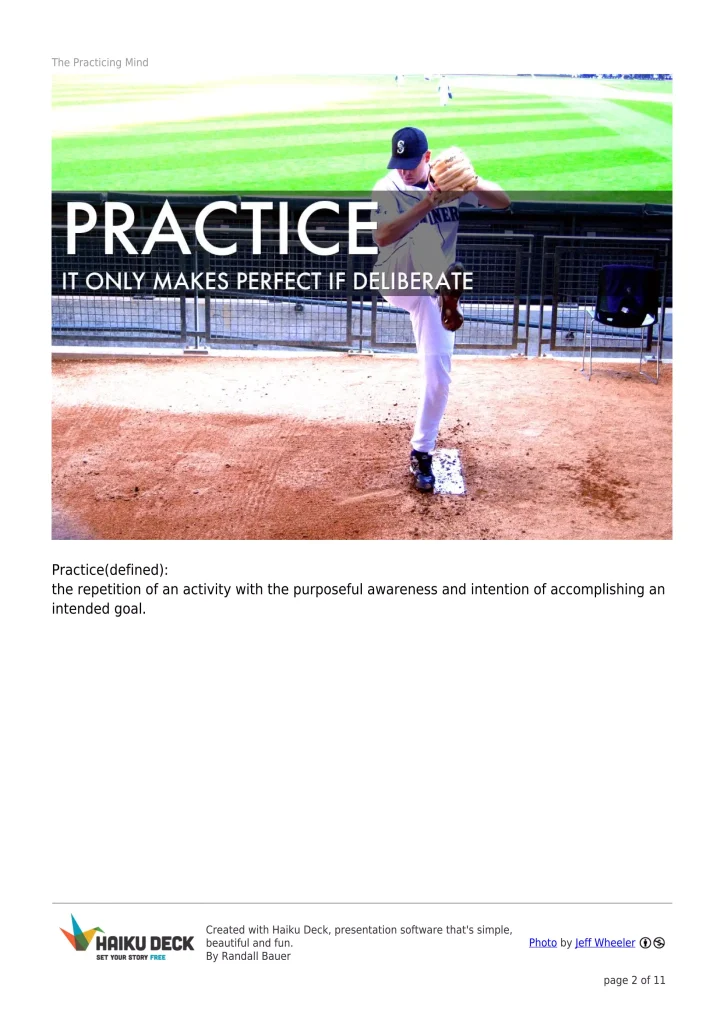
In today’s fast-paced environment, the pursuit of excellence can feel overwhelming, particularly when striving for mastery in a specific domain. Fortunately, the concept of deliberate practice serves as a guiding light, offering a structured approach to skill enhancement that is both actionable and effective. Unlike mindless repetition, which can lead to frustration and stagnation, deliberate practice emphasizes intentionality and focus, ensuring that every moment spent honing a skill is purposeful.
Defining Deliberate Practice
What sets deliberate practice apart from regular practice is its commitment to constant improvement. Here are the essential components that encapsulate this concept:
- Set specific goals: It is critical to establish concrete, measurable objectives that reflect your current skill level and target areas for growth. For example, a novice guitarist may aim to master a particular chord progression within a month.
- Seek feedback: Regularly soliciting feedback from experienced mentors or peers can be transformative. Constructive criticism helps identify weaknesses that may not be evident during solo practice sessions. Athletes, for instance, often review game footage to pinpoint areas needing refinement.
- Push your limits: True progress occurs when you challenge yourself beyond what feels comfortable. For instance, a swimmer may incorporate high-intensity interval training (HIIT) to develop speed and endurance, which surpasses their usual routines.
Real-World Applications
The benefits of deliberate practice extend into numerous fields. Consider:
- Sports: Renowned athletes like Serena Williams demonstrate this principle through countless hours devoted to specific drills aimed at improving accuracy and agility, ultimately leading to their success on the court.
- Music: Acclaimed cellist Yo-Yo Ma emphasizes the importance of meticulous practice sessions, where each note and phrase is examined under a microscope, allowing him to express profound emotions through his music.
- Education: Scholars often employ focused study techniques, such as spaced repetition and active recall, to deeply understand complex subjects, thereby increasing retention and mastery of the material.
The Science Behind Mastery
What gives deliberate practice its strength is the scientific research that supports its efficacy. Studies have shown that nearly 10,000 hours of practice are often cited as a threshold for mastering a discipline; however, it’s not merely the accumulation of time but the quality of that practice that yields true improvement. Deliberate practice cultivates not just skill but also motivation and resilience, which are crucial components for anyone on the path to success.
In conclusion, whether you aspire to be an elite athlete, a skilled musician, or a knowledgeable academic, understanding and applying the principles of deliberate practice can profoundly accelerate your journey toward expertise. With the right mindset and strategies, you can unlock your full potential and embark on a transformative journey. Are you prepared to revolutionize your approach to skill development and take the first step towards mastery?
DIVE DEEPER: Click here to learn more
The Mechanics of Deliberate Practice
To fully appreciate the power of deliberate practice, it’s vital to delve into its mechanics and principles that drive skill mastery. At its core, deliberate practice is not simply about doing something repeatedly; it constitutes a sophisticated approach that integrates cognitive science with structured methodology. This framework enables individuals to systematically enhance their performance and unlock hidden potential.
The Framework of Deliberate Practice
Understanding the designated framework of deliberate practice requires examining several key factors that contribute to its effectiveness:
- Intentional Focus: Every session of deliberate practice must have a clear purpose. The goal is not to simply “go through the motions” but to focus intently on what needs improvement. This could range from refining a specific technique in sports, honing a melodic progression in music, or tackling challenging concepts in academic subjects.
- Analysis and Reflection: After reaching specific goals in practice, individuals should take the time to reflect on their performance. This involves analyzing what worked, what didn’t, and how to tweak their approach moving forward. For instance, a chess player might review their games to understand their strategic missteps.
- Variability: Introducing variations to practice routines can stimulate growth. Just as a baseball player might practice batting against different pitching styles, diversifying practice elements can expose weaknesses and strengthen skills in unpredictable scenarios.
Incorporating Deliberate Practice into Daily Life
Integrating deliberate practice into daily routines can seem daunting, but it can be broken down into manageable steps. For example, consider the following strategies that can facilitate this process:
- Time Management: Allocate specific time slots dedicated solely to practice. This might mean setting aside 30 minutes a day for a musician to engage exclusively in skill-building exercises.
- Use of Technology: Leverage technology to enhance learning. Applications designed to track progress or provide simulated environments can provide immediate feedback, encouraging refinement and adjustment on the fly.
- Establish a Routine: Consistency plays a vital role. Building a practice routine that is observed regularly helps cultivate habits, which can lead to significant improvements over time.
The essence of deliberate practice lies in its ability to transform ordinary efforts into extraordinary outcomes. By weaving together focus, feedback, and intentionality, this method fosters not just competency but also builds confidence in one’s abilities. As such, it serves as a powerful tool for individuals across disciplines—from professional athletes to aspiring artists and scholars. In an age where auto-pilot practices are prevalent, adopting a more conscious approach to skill development can be a game-changer.
The Mechanics and Science Behind Deliberate Practice
Deliberate practice is not just about repetition; it is a carefully structured process that involves setting specific goals, seeking feedback, and continuously refining skills. This method is grounded in psychology and educational research, drawing insight from expert practitioners across various fields. According to studies, 10,000 hours of practice does not guarantee mastery; rather, the quality of practice itself is pivotal. This can be illustrated through the example of musicians, athletes, and even chess players, who often engage in focused training sessions that target their weaknesses rather than simply repeating what they already do well.In music, for instance, a violinist may spend hours improving a specific passage that poses challenges, rather than playing through an entire piece without addressing those issues. This focused approach allows for meaningful progress and helps in building a solid foundation of technique. The same principle applies in sports; athletes often incorporate drills that concentrate on individual skills, enabling them to enhance their overall performance during competitions.Another critical element of deliberate practice is feedback. Professional coaches and mentors play an essential role in this process by providing constructive criticism, enabling individuals to identify areas for improvement. Self-assessment is also crucial, as practitioners learn to evaluate their performances critically. Consistent feedback loops foster a growth mindset, driving practitioners to strive for excellence continually. Embracing this iterative nature of practice leads to significant skill advancement, particularly when individuals are willing to step out of their comfort zones.Deliberate practice promotes neuroplasticity, the brain’s ability to reorganize itself by forming new neural connections throughout life. Research indicates that targeted practice can lead to both physical and cognitive adaptations in the brain, enhancing performance in various tasks and endeavors. This aspect highlights the potential of deliberate practice not only for acquiring technical skills but also for developing a deeper understanding of the mechanics behind performance. Ultimately, the power of deliberate practice lies in the deliberate choices made during training. The pursuit of mastery through focused repetition requires an unwavering dedication to personal growth, a willingness to embrace challenges, and a strategic framework that encourages continual development. As individuals dive deeper into the specifics of their craft, they become equipped to navigate the complexities of their disciplines with greater finesse and confidence.
| Advantages of Deliberate Practice | Key Characteristics |
|---|---|
| Enhanced Skill Development | Focused on individual weaknesses, leading to targeted growth. |
| Increased Neuroplasticity | Helps in forming new neural connections, enhancing overall performance. |
DIVE DEEPER: Click here to discover more
Unlocking Potential Through Targeted Feedback
Feedback acts as a crucial conduit for transforming effort into tangible improvement; it is the linchpin of mastering various skills. Without effective feedback, practitioners often face the risk of being unaware of their mistakes. This lack of awareness can lead to the reinforcement of faulty habits that not only stall progress but may also exacerbate existing challenges. In the realm of learning, the ability to seek out and accept constructive criticism becomes a vital skill. Educational psychologists underscore that timely feedback can drastically enhance the acquisition of skills by providing learners with immediate insights into areas needing adjustment.
The Significance of Mentorship and Peer Review
Mentorship is a powerful force in many disciplines, including sports, music, and science, where experienced individuals share their wisdom with novices. For instance, the legendary basketball coach Phil Jackson has often highlighted the importance of feedback in shaping his athletes’ performance. Jackson’s approach involved rigorous, personalized attention during practices, which allowed him to pinpoint players’ strengths and areas for improvement. By providing focused feedback, he crafted customized training regimens that adhered to the principles of deliberate practice. His techniques have been instrumental in transforming many players into champions, as they benefited not just from practice but from an acute understanding of their performance.
Peer review is another essential component that enhances learning through mutual engagement. When individuals work collaboratively, they create a rich environment for reciprocal feedback. For example, in academic contexts, study groups provide a platform where students can share and critique each other’s arguments, which cultivates deeper understanding. One student may identify a gap in reasoning that another has overlooked, fostering a more robust grasp of the subject matter. Furthermore, this communal approach not only boosts skill development but also cultivates a profound sense of belonging among classmates, reinforcing the idea that learning is often a shared journey.
The Power of Mindset and Resilience
Central to the notion of deliberate practice is the idea of nurturing a growth mindset, a term popularized by psychologist Carol Dweck. This concept emphasizes that abilities are not fixed; instead, they can be developed through effort, commitment, and constructive engagement. This mindset is crucial for anyone deeply involved in deliberate practice, as it encourages individuals to embrace challenges and view obstacles as opportunities for learning and growth, rather than as threats.
Moreover, resilience is intimately connected to achieving success in any domain. The path to mastery is rarely linear; it often involves navigating through setbacks and challenges. For instance, celebrated athletes frequently recount tales of their struggles alongside their victories. Michael Jordan, an iconic figure in basketball history, famously stated, “I’ve missed more than 9,000 shots in my career. I’ve lost almost 300 games. Twenty-six times, I’ve been trusted to take the game-winning shot
DISCOVER MORE: Click here to learn about cultivating a growth mindset
Conclusion: Embracing the Journey to Mastery
In the quest for excellence, deliberate practice stands out as a transformative approach. It is rooted not just in repetition, but in a mindset that embraces challenge, feedback, and a clear understanding of one’s weaknesses. Throughout this article, we’ve explored how feedback serves as a critical component in honing skills, highlighting the significant roles of mentorship and peer collaboration in fostering a rich learning environment.
The evolution of skills, be it in sports, the arts, or academics, is deeply intertwined with the notion of a growth mindset. This perspective encourages learners to see potential in effort and resilience, crucial elements in overcoming obstacles. The stories of greats like Michael Jordan remind us that setbacks are merely stepping stones in the journey toward mastery. Resilience forms the backbone of successful practice, as it empowers individuals to persist through difficulties and continuously refine their approach.
Ultimately, the power of deliberate practice lies in its ability to unlock innate potential, transforming novices into experts through focused repetition and targeted feedback. As learners, we are called to embrace this journey, recognizing that mastery is a process. With dedication, a commitment to learning, and a willingness to adapt, anyone can harness the principles of deliberate practice to elevate their skills and achieve personal and professional success. As you embark on your path to mastery, remember: every deliberate action is a step closer to excellence.